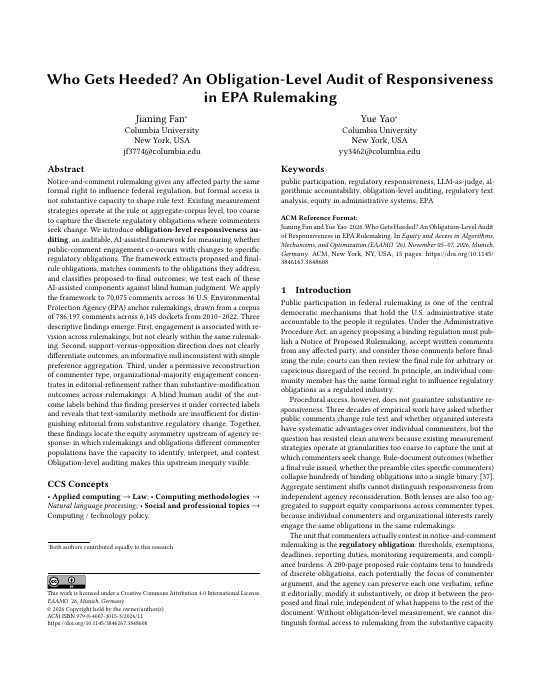
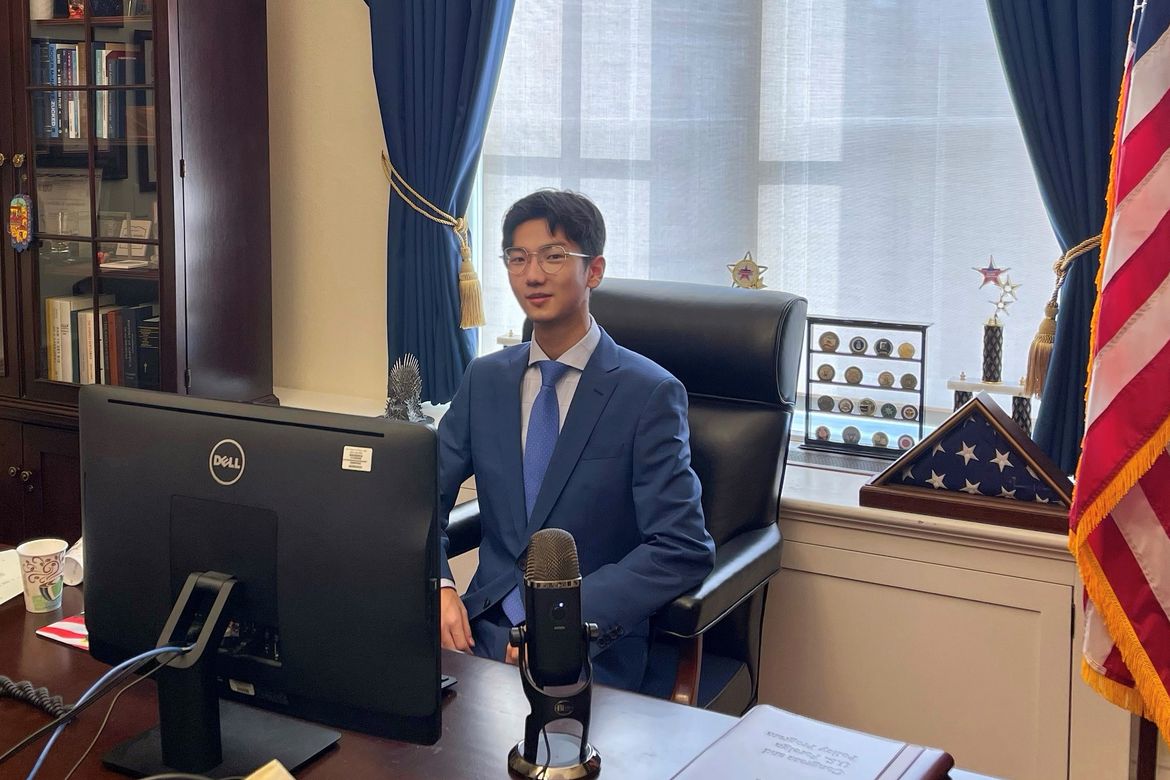
I came to AI through political science. Studying representation and working with constituent opinions in Congress made me attentive to how information is organized, and whose perspective survives that process.
At Columbia, I’ve deepened my skills in computing and machine learning while exploring how AI can be used in public policy. This builds on my background in political science and data analysis, and informs both my research and engineering work. I’m interested in building useful AI systems and understanding how they shape the ways people interpret evidence, make decisions, and work within institutions.
Research interests
AI evaluation · Institutional knowledge · Human–AI collaboration
Questions I’m exploring+
How can we tell when an AI system is wrong?
A useful evaluation should reveal where a system stops being trustworthy. I’m interested in making failures visible and understanding how they change the conclusions we can responsibly draw.
How does institutional knowledge become a system?
Much of how an organization works is unwritten. Turning that knowledge into an AI workflow requires making definitions, evidence standards, and decision boundaries explicit, then checking them with the people who do the work.
What should we delegate to AI?
Even when a system can perform a task, deciding what to entrust to it remains a human judgment. I’m interested in the boundary between useful delegation, professional expertise, and responsibility.